
Pico toning and laser toning both treat melasma and uneven tone with low-energy laser passes, but they differ in pulse speed. Laser toning uses nanosecond Q-switched Nd:YAG pulses, while pico toning, such as PicoSure Pro, uses picosecond pulses that rely less on heat. At Re:berry Hongdae, the choice depends on pigment type and skin sensitivity. Results vary by individual.
Re:berry Clinic Hongdae · Information reviewed for accuracy · Results vary by individual.
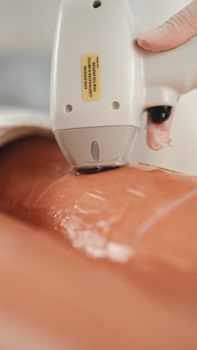
What is the core difference between pico and laser toning?
Both treatments are called toning because they use low energy spread over the whole face in multiple gentle passes, rather than aggressive spot treatment. The main difference is how long each laser pulse lasts.
- Laser toning: a Q-switched Nd:YAG laser at 1064 nm delivers pulses in the nanosecond range, which is one billionth of a second.
- Pico toning: a picosecond laser, such as PicoSure Pro, delivers pulses about a thousand times shorter.
Shorter pulses shatter pigment particles more through a pressure, or photomechanical, effect and less through heat. In theory, less heat means less inflammation, which matters because heat and irritation can worsen melasma. In practice, both methods are effective for many people, and individual response varies.
How do they compare side by side?
Pigment breakdown
Pico lasers break pigment into finer particles, which the body may clear more easily. Laser toning breaks pigment into somewhat larger fragments over more sessions. For stubborn, mixed or deeper pigment, some doctors lean toward pico.
Heat and sensitivity
Laser toning creates slightly more heat at the same perceived intensity. People with very reactive skin, active redness or a history of rebound pigmentation may be steered toward lower-heat approaches, although careful laser toning is also used on sensitive skin.
Track record
Laser toning has been used for melasma in Asia for many years, with a large body of clinical experience. Picosecond toning is newer but has been widely adopted. Both are established options in Korean clinics.
Comfort
Both usually feel like light snapping or flicking on the skin. Most people do not need numbing cream for either. Pico may feel slightly sharper on some areas, while laser toning may feel slightly warmer.
Downtime
Both are generally low downtime. Mild redness may last minutes to a few hours, and makeup is often possible the same or next day. Occasionally, pico can cause light pinpoint redness or tiny crusts when higher settings are used.
Number of sessions
Both typically involve a series of 5–10 sessions. Laser toning is often repeated every 1–2 weeks, while pico toning intervals may be slightly longer, around 2–4 weeks, depending on settings. Maintenance is common for melasma with either method.
Which pigment concerns suit each treatment?
- Melasma: both are used. Laser toning is a long-standing choice; pico may help when melasma is stubborn or mixed with other pigment.
- Freckles and sun spots: pico lasers are often preferred, sometimes with spot settings rather than toning alone. See PicoSure Pro for freckles and sun spots.
- Post-inflammatory hyperpigmentation: both can help once acne or irritation has calmed.
- Dull, uneven tone: both may brighten skin over a series.
- Texture and fine pores: some pico systems have focus lens settings that may refine texture.
Correct diagnosis comes first, because melasma, freckles, sun spots and acquired dermal pigmentation can look similar yet respond differently. Read how to tell melasma from freckles.
What are the risks of each?
When settings are chosen carefully, both treatments are generally well tolerated. Shared risks include:
- Rebound or worsening pigment: more likely with sun exposure, heat or overtreatment.
- Mottled hypopigmentation: small pale spots, mainly reported after long series of frequent, higher-energy toning.
- Temporary redness, sensitivity or breakouts.
The way to reduce these risks is the same for both: doctor-led settings, appropriate intervals, consistent sun protection and reassessment rather than repeating sessions automatically. If you have a tan, are pregnant or take photosensitizing medication, tell the clinic in advance.
Why do many plans use both?
Re:berry's approach is to design a combination of treatments rather than rely on a single procedure. For pigment, that might mean alternating laser toning and pico toning, or using pico for specific spots and laser toning for overall tone. Some patients also add a calming laser such as Genesis for redness, or a skin booster to support the barrier between sessions.
A combined plan can also help when progress plateaus. If melasma stops improving with one approach, changing the wavelength, pulse type or interval may help, although results vary by individual.
How do I decide which to try first?
These questions are helpful to bring to your consultation:
- What type of pigment do I have, and how deep is it?
- Is my skin currently sensitive, red or recently tanned?
- How many sessions can I realistically attend, especially if I am visiting Seoul?
- What will we do if pigment darkens or stops improving?
- Which home care products should I use or avoid between sessions?
Visitors on short trips should know that one session of either treatment rarely changes melasma dramatically. Starting a series and continuing at another Re:berry branch, or on a later trip, is often more realistic.
Aftercare for both treatments
- Apply broad-spectrum sunscreen every morning and reapply outdoors.
- Moisturize well and use a gentle cleanser.
- Avoid scrubs, peels and strong acids for several days unless advised otherwise.
- Skip saunas, hot yoga and heavy drinking on the day of treatment.
Our laser aftercare guide covers the details.
Booking at Re:berry Hongdae
Book a consultation through our Booking page, and see Location & Hours for the address. Pricing depends on the device, the area and the number of sessions, and it is confirmed in writing at consultation.
Key facts
- Pulse duration: Laser toning in nanoseconds; pico toning in picoseconds
- Main effect: Laser toning more photothermal; pico more photomechanical
- Typical sessions: Both often 5–10, every 1–4 weeks
- Downtime: Usually minimal for both
- Best for: Melasma, dullness, mixed pigment
- Good to know: Many plans alternate or combine the two
Frequently asked questions
Is pico toning stronger than laser toning?
Not exactly. Pico toning delivers shorter pulses that break pigment more mechanically, while laser toning relies more on heat. Stronger is not always better for melasma, which can react to irritation. The right choice depends on your pigment type and skin sensitivity, so your doctor will set the energy for your skin.
Can I switch from laser toning to pico toning?
Yes. Switching is common when progress slows or when a doctor wants to address a different pigment component. The transition is usually straightforward, though spacing between sessions may be adjusted. Bring records of previous treatments if you had them elsewhere so settings can be planned safely.
Which is better for darker skin tones?
Both can be used on medium and darker skin tones with careful settings, since low-fluence toning carries less risk than aggressive spot treatments. Some doctors favor picosecond lasers because of lower heat, while others are very experienced with Nd:YAG toning. Experience and conservative settings matter more than the device alone.
How soon can I see results from either?
Some people notice brighter skin after one or two sessions, but meaningful change in melasma typically appears after several sessions over one to three months. Results vary by individual and depend on sun exposure, hormones and home care, so photos under consistent lighting help track progress.
Keep reading
Before you book
This page is general information, not a diagnosis. Suitability, dose, number of sessions and expected results are decided by a doctor at consultation, and results vary by individual. Possible side effects include redness, swelling and bruising. Pricing is confirmed in writing before any treatment. See our medical disclaimer.
Start with a diagnosis, not a package
Re:berry Clinic Hongdae designs your plan after a one-to-one skin assessment. Multilingual consultation support is available.