
Melasma usually appears as blurry, symmetrical brown or gray-brown patches on the cheeks, forehead or upper lip, often linked to hormones and sun. Freckles are small, distinct, flat dots that darken in summer and fade in winter. At Re:berry Hongdae, a doctor confirms the type before treatment, because melasma and freckles respond differently to lasers.
Re:berry Clinic Hongdae · Information reviewed for accuracy · Results vary by individual.
What does melasma look like?
Melasma is a chronic pigment condition. It typically shows as larger patches with soft, blurred edges, often mirrored on both cheeks, the forehead, the bridge of the nose or the upper lip. It is more common in women and in people with medium to darker skin tones, including many East Asian patients. Pregnancy, hormonal contraception, UV and heat can trigger or worsen it.
What do freckles look like?
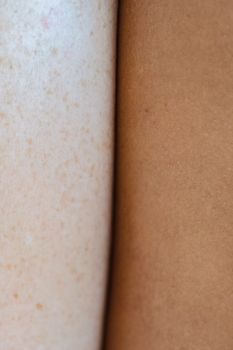
Freckles(ephelides) are small, flat, round dots, usually a few millimeters across, scattered over sun-exposed areas such as the nose and cheeks. They often appear in childhood, are strongly genetic, and darken in summer before fading in winter. Sun spots (solar lentigines) are similar but larger, more persistent and more common with age.
Quick comparison
- Size: melasma forms patches; freckles are dots.
- Edges: melasma is blurred; freckles are defined.
- Pattern: melasma is often symmetrical; freckles are scattered.
- Seasonal change: freckles fade noticeably in winter; melasma may lighten but often persists.
- Triggers: melasma is strongly linked to hormones and heat as well as UV.
Can you have both?
Yes. Many people have mixed pigmentation, such as melasma patches with freckles or sun spots on top. This is why professional diagnosis matters; a doctor may use magnified examination or skin imaging to see pigment depth and pattern.
Why does the difference matter for treatment?
Freckles and sun spots often respond to targeted pigment lasers such as PicoSure Pro. Melasma, however, can worsen with strong heat or aggressive treatment, so doctors typically use gentle, repeated approaches such as laser toning for melasma, combined with strict sun protection and sometimes topical care. Results vary by individual, and melasma can recur. See what causes melasma to come back.
Can I check at home?
Looking at your skin in daylight and comparing summer and winter photos can give clues, but self-diagnosis is unreliable, especially with mixed pigment. A doctor's examination before any laser is the safest way to avoid making melasma worse.
At a glance
- Melasma look: Larger, blurry-edged, often symmetrical patches
- Freckle look: Small, round, well-defined dots
- Melasma triggers: Hormones, UV, heat, genetics
- Freckle triggers: Genetics and UV
- Treatment approach: Melasma: gentle, repeated; freckles: targeted pigment laser
Related questions
Can melasma turn into freckles?
No. They are different conditions with different causes. However, both can exist on the same face, and sun exposure can darken both. A doctor can identify which areas are melasma and which are freckles or sun spots, which changes how each is treated.
Is melasma more common in Asian skin?
Melasma is more common in people with medium to darker skin tones, including many East Asian, South Asian and Latin American patients, and is more common in women. Hormones, UV and heat are important triggers. Careful treatment selection helps reduce the risk of worsening.
Can I treat freckles if I also have melasma?
Often yes, but carefully. Targeted treatment of freckles must avoid irritating nearby melasma. A doctor may treat melasma gently first, then address distinct spots with precise settings, combined with strict sun protection throughout. Progress is usually reviewed over several sessions rather than in a single visit.
Keep reading
Before you book
This page is general information, not a diagnosis. Suitability, dose, number of sessions and expected results are decided by a doctor at consultation, and results vary by individual. Possible side effects include redness, swelling and bruising. Pricing is confirmed in writing before any treatment. See our medical disclaimer.
Still have a question?
A doctor at Re:berry Clinic Hongdae can answer it for your skin specifically. Multilingual consultation support is available.