
Laetigen is an injectable skin booster that delivers type I collagen into the dermis to support firmness, texture and hydration. At Re:berry Hongdae it is typically given in a short series about 2–4 weeks apart, takes around 30–40 minutes including numbing, and may cause small bumps or redness for a day or two. Results vary by individual.
Re:berry Clinic Hongdae · Information reviewed for accuracy · Results vary by individual.
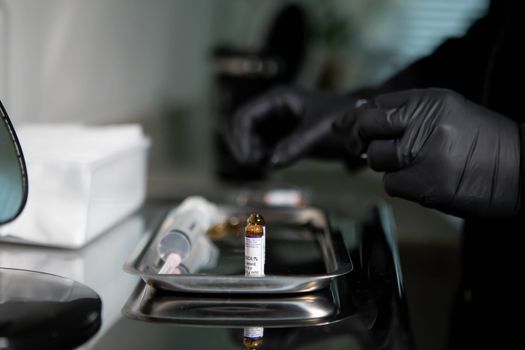
What is Laetigen?
Laetigen is a collagen booster: an injectable that places type I collagen directly into the skin. Type I collagen is the most abundant structural protein in the dermis and is closely tied to how firm and resilient skin feels. Its levels decline with age, sun exposure and smoking, which contributes to skin that looks thinner and less springy.
Unlike hyaluronic acid fillers, Laetigen is not designed to add visible volume or reshape features. It is meant to support the skin's own framework so the surface looks smoother and more even over time. It is one of several boosters on the Re:berry menu, alongside Re2O, Rejuran Healer and CellREDM.
How does a collagen booster work?
When collagen is injected in tiny amounts across the treatment area, it is thought to act as a scaffold within the dermis. That scaffold may help improve skin density in the short term and provide a supportive environment for the skin's own repair processes. The effect is generally subtle and builds gradually rather than appearing overnight.
Because collagen products can be derived from animal sources, the doctor will ask about allergies, especially to collagen, gelatin or previous collagen injections, before recommending it. Ask at consultation about the product source and composition if this matters to you.
Who might benefit from Laetigen?
- People in their late 20s to 50s noticing early thinning, fine crepey lines or loss of bounce
- Skin that feels tight and dehydrated even with good home care
- Areas where skin is naturally thin, such as the cheeks near the eyes or the neck, subject to the doctor's assessment
- Patients who want gradual improvement in skin quality without changing facial shape
- Those combining lifting devices with a booster to work on both structure and surface
It is less suited to deep folds, significant sagging or volume loss, which usually need lifting devices, filler or a signature program instead.
What happens during treatment at Re:berry Hongdae?
- Diagnosis first: The doctor assesses skin thickness, hydration and texture, and asks about your goals and timeline.
- Cleansing and numbing: Numbing cream is applied for roughly 20–40 minutes.
- Injection: Small amounts are placed across the area by hand or with an injection device, depending on the plan.
- Soothing: A calming mask or cooling may follow.
- Aftercare briefing: You receive written instructions before you leave.
How many sessions do I need and how long does it last?
A common starting plan is 2–4 sessions spaced about 2–4 weeks apart. Many patients notice skin looking more even and hydrated several weeks after the first or second session. Because collagen in the skin turns over naturally, maintenance every 4–6 months is often discussed, although this varies with age, skin condition and lifestyle. Results vary by individual.
What are the side effects and downtime?
Typical effects are mild and short-lived:
- Small raised bumps at injection points, usually settling within 1–3 days
- Redness or mild swelling for several hours to a day
- Pinpoint bruising, which may take up to a week to fade
- Tenderness when touching the area
Less commonly, allergic reactions, infection or prolonged lumps can occur. Contact the clinic if you notice increasing pain, heat, spreading redness or any change that worries you. Laetigen is usually postponed during pregnancy or breastfeeding, active skin infection, or flare-ups of autoimmune skin conditions.
How does Laetigen compare with other boosters?
Each booster on the Re:berry menu has a different main ingredient and purpose, which is why the doctor chooses based on diagnosis rather than popularity:
- Laetigen: collagen as a structural support for thin or crepey skin
- Rejuran Healer: salmon-derived polynucleotides, often chosen for repair and texture
- CellREDM: extracellular-matrix based, often discussed for scarring and density
- Re2O: a skin component booster frequently used when hydration and glow are the priority
Some patients alternate two boosters across a series. Others stay with one and assess progress after two or three sessions before deciding on the next step.
What can Laetigen be combined with?
Re:berry tends to design combinations rather than single procedures. Common pairings include:
- Thermage FLX or Ultherapy Prime: devices address tightening and lift, while the booster works on surface quality
- HydraFacial: a cleansing and hydrating step that can be scheduled before booster sessions
- Re2O or Rejuran Healer: alternated or layered when hydration or repair is also a goal
Read how Laetigen compares to another menu option in Laetigen vs Re2O boosters, or see the Laetigen guide for dehydrated skin.
Aftercare in the first days
- Avoid makeup for the rest of the day unless the doctor says otherwise
- Skip saunas, jjimjilbang, hot yoga and heavy exercise for about 24–48 hours
- Avoid alcohol on the day to limit bruising
- Use gentle cleanser, moisturizer and SPF 30+ sunscreen
- Do not massage or press on the bumps
Pricing depends on the area, product quantity and session plan, and is confirmed in writing at consultation. Book through the channels on our Booking page.
Key facts
- Booster type: Type I collagen injectable
- Treatment time: About 30–40 minutes including numbing
- Downtime: Mild bumps or redness, typically 1–3 days
- Sessions: Commonly 2–4, spaced 2–4 weeks apart
- Results seen: Often gradually over several weeks
- Best for: Thin, crepey or dehydrated skin; early loss of firmness
Frequently asked questions
Is Laetigen the same as a filler?
No. Fillers such as Juvederm or Restylane are hyaluronic acid gels used to add volume or contour. Laetigen delivers collagen in small amounts to support the skin's structure and texture, so it does not visibly change facial shape. Some patients use both, for different goals, after a doctor's assessment.
Does Laetigen hurt?
Most patients describe a series of small pinches. Numbing cream is applied for around 20–40 minutes beforehand, which makes the procedure tolerable for many people. Areas near bone or with thinner skin can feel more sensitive. Tell the doctor during treatment if you need a pause.
Can I fly home after a Laetigen session?
Many people fly within a day or two because downtime is usually limited to small bumps and redness. Cabin dryness can make skin feel tighter, so moisturize well. If you bruise easily, allow a little more time before photos or events. Discuss your flight date at consultation.
Can I have Laetigen if I am allergic to collagen?
A known allergy to collagen or related products is usually a reason to avoid this booster. Tell the doctor about any allergies, previous reactions to injectables, or reactions to gelatin. The doctor may suggest a different booster, such as a polynucleotide or PDRN product, depending on your history.
Keep reading
Before you book
This page is general information, not a diagnosis. Suitability, dose, number of sessions and expected results are decided by a doctor at consultation, and results vary by individual. Possible side effects include redness, swelling and bruising. Pricing is confirmed in writing before any treatment. See our medical disclaimer.
Start with a diagnosis, not a package
Re:berry Clinic Hongdae designs your plan after a one-to-one skin assessment. Multilingual consultation support is available.