
Rejuran Healer and CellREDM are both injectable skin boosters, but they work differently. Rejuran Healer uses salmon-derived polynucleotides to support skin repair and texture. CellREDM is an extracellular matrix (ECM) booster that supplies collagen-based dermal scaffolding. At Re:berry Hongdae, Rejuran often suits thin or damaged skin, while CellREDM suits volume-poor, crepey skin.
Re:berry Clinic Hongdae · Information reviewed for accuracy · Results vary by individual.
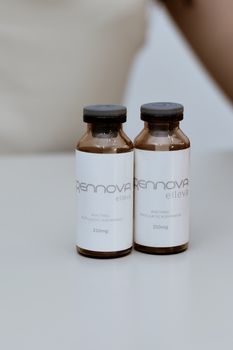
The short version
Both treatments belong to the broad family of skin boosters: injectables placed in the skin to improve quality rather than to add obvious volume or freeze movement. The difference lies in what they deliver. Rejuran Healer provides polynucleotides that are thought to support the skin's own repair signals. CellREDM provides extracellular matrix, the structural material that normally surrounds skin cells, as a kind of scaffold.
One is closer to a repair signal; the other is closer to building material. That is why the choice often depends on whether your skin mainly needs healing or support.
What is Rejuran Healer?
Rejuran Healer is a Korean-developed booster made from purified polynucleotide (PN) fragments derived from salmon DNA. It has been widely used in Korea for years and is known for improving texture, fine lines, sensitivity and the resilience of thin, stressed skin.
- Feel: The injection is often described as stinging, so numbing cream is standard.
- After: Small raised bumps at each point, usually settling in one to two days.
- Known for: Repairing skin after sun damage, acne marks, or harsh treatments.
What is CellREDM?
CellREDM is an injectable made from human-derived dermal tissue that has been processed to remove cells, leaving extracellular matrix components such as collagen. In Korea it is described as an ECM-based booster. The idea is to supplement the dermal framework directly, which may make skin feel denser and look smoother. For a fuller explanation see What is CellREDM?
- Feel: Also injected after numbing; comfort varies by area and technique.
- After: Bumps and mild redness, generally short-lived.
- Known for: Thin, crepey skin and areas that look slightly hollow or lacking in density.
Side-by-side comparison
Mechanism
Rejuran Healer is thought to work by supporting the skin's repair environment and hydration. CellREDM supplies structural matrix that may support collagen density. Neither is a filler in the traditional sense, and neither lifts sagging tissue.
Best suited to
- Rejuran Healer: Sensitive or damaged skin, fine texture, post-acne marks, redness-prone skin, early fine lines.
- CellREDM: Thin skin that lacks density, crepey areas such as under-eyes or neck, mild hollowness, aging skin needing structural support.
Sessions
Both are commonly given as a course of two to three sessions spaced around four weeks apart, followed by maintenance every six to twelve months. The exact plan depends on your skin and response.
Downtime
Downtime is similar: injection bumps for a day or two, possible redness and occasional bruising for up to a week. Under-eye treatment tends to show more swelling.
Allergy and sourcing considerations
Because Rejuran is salmon-derived, tell your doctor about any fish allergy. CellREDM is derived from processed human tissue; ask at consultation if you have questions about sourcing or personal preferences, and the doctor can explain alternatives.
Results timeline
With either booster, changes in texture and glow commonly appear two to four weeks after a session, building across the course. Results vary by individual.
Which should I choose?
A simple way to think about it:
- If your skin is reactive, recovering, or showing texture and fine lines, Rejuran Healer is often the first suggestion.
- If your skin is thin, crepey or looks deflated in specific areas, CellREDM may be the better fit.
- If you have both, the doctor may recommend one first, alternate them, or use them in different zones.
Re:berry's philosophy is to diagnose first and then design a combination, so the answer comes from examining your skin rather than from the product name.
Can they be combined?
Yes. Some plans use Rejuran Healer for the cheeks and CellREDM for the under-eyes, or alternate the two across a course. Boosters also pair well with energy-based lifting such as Thermage FLX or Ultherapy Prime, since boosters work on skin quality and devices work on firmness. If you are considering several boosters, our Rejuran vs PDRN vs exosome and Laetigen vs Re2O comparisons are useful background.
Who should avoid both
Skin boosters are generally postponed during pregnancy and breastfeeding, with active skin infection or cold sores in the area, and in people with certain autoimmune or bleeding conditions. Tell your doctor about blood thinners, supplements such as fish oil or vitamin E, and any recent filler or threads.
Planning around travel
If you are visiting Seoul, schedule booster injections early in your trip so bumps settle before flights and photos. Most people can fly a day or two after boosters. A full course needs repeat visits, so some travelers start in Hongdae and continue on a later trip.
Aftercare
Avoid makeup on injection points for the rest of the day, skip saunas, heavy exercise and alcohol for 24 hours, and use gentle skincare and sunscreen. Our skin booster aftercare guide covers the details.
Pricing and booking
Pricing depends on the product, area, amount and number of sessions, and is confirmed in writing at consultation. Book via our Booking page.
Key facts
- Rejuran Healer: Polynucleotides (PN) from salmon DNA
- CellREDM: Human-derived acellular extracellular matrix (collagen-based)
- Main goal: Rejuran supports repair; CellREDM supports dermal structure
- Typical course: Both commonly 2–3 sessions, about 4 weeks apart
- Downtime: Small bumps for 1–2 days with both; bruising possible
- Choice: Decided at consultation by skin thickness and goals
Frequently asked questions
Is CellREDM stronger than Rejuran Healer?
They are not stronger or weaker versions of the same thing. Rejuran Healer supports repair and texture, while CellREDM supplies structural matrix. Which feels more effective depends on what your skin lacks. Thin, crepey skin may respond more to CellREDM, while sensitive, damaged skin may respond more to Rejuran.
Which booster hurts less?
Comfort varies by person, area and technique. Rejuran Healer is widely described as one of the more stinging boosters, while experiences with CellREDM differ. Both are performed after numbing cream, and your practitioner can pause or adjust technique if needed. Under-eye areas tend to feel more sensitive with either.
Can I get Rejuran Healer and CellREDM on the same day?
In some cases, a doctor may use the two in different areas during one visit, for example CellREDM under the eyes and Rejuran on the cheeks. Whether this is suitable depends on your skin, the total amount injected and your downtime needs, so it is decided during consultation.
How long do results last?
After a full course, many patients maintain results with a session every six to twelve months. How long improvements last depends on age, sun exposure, lifestyle and skin condition. Results vary by individual, and daily sunscreen and hydration help maintain them.
Keep reading
Before you book
This page is general information, not a diagnosis. Suitability, dose, number of sessions and expected results are decided by a doctor at consultation, and results vary by individual. Possible side effects include redness, swelling and bruising. Pricing is confirmed in writing before any treatment. See our medical disclaimer.
Start with a diagnosis, not a package
Re:berry Clinic Hongdae designs your plan after a one-to-one skin assessment. Multilingual consultation support is available.