
PDRN skin booster is an injectable containing polydeoxyribonucleotide, DNA fragments commonly derived from salmon, used to support skin repair, texture and resilience. At Re:berry Hongdae it is typically given in 3–5 sessions about 2–4 weeks apart, with small bumps or redness for 1–3 days. Results vary by individual.
Re:berry Clinic Hongdae · Information reviewed for accuracy · Results vary by individual.
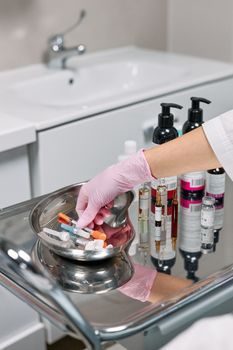
What is PDRN?
PDRN stands for polydeoxyribonucleotide, a mixture of DNA fragments that in aesthetic products is most often purified from salmon. It has a history of use in wound-healing research and is thought to support tissue repair partly by acting on adenosine A2A receptors, which are involved in reducing inflammation and encouraging new blood vessels and cell activity.
In skin clinics, PDRN is injected in small amounts into the dermis as a regenerative skin booster. It does not fill or lift. Instead it aims to improve the quality of the skin itself: texture, elasticity, barrier resilience and recovery after other treatments.
How is PDRN different from Rejuran?
Both come from salmon DNA, but they are processed differently. PDRN consists of shorter fragments and is typically a thin liquid, while polynucleotide (PN) products such as Rejuran Healer contain longer chains that form a slightly thicker, more viscous gel. Many doctors describe PN as having a longer-lasting scaffold effect, while PDRN spreads easily and tends to cause milder bumps. A full comparison is in Rejuran vs PDRN vs exosome.
Who is PDRN suited to?
- Skin that looks tired, rough or uneven despite a solid home routine
- Sensitive or easily irritated skin that needs a gentler booster
- Recovery support after lasers such as pico toning or Genesis
- Early fine lines and loss of glow, especially around the cheeks
- Mild post-acne texture, as part of a broader plan
PDRN is generally less suited to deep wrinkles, marked sagging or hollows, which typically need lifting devices or filler. It works best as a quality-of-skin step within a wider plan rather than a standalone solution for structural aging.
Patients near Hongdae often ask for PDRN because they want a skin-quality step with limited downtime that fits around work, classes or a short trip.
What happens during a PDRN session?
- Consultation: The doctor checks your skin, allergies (especially fish) and medications.
- Numbing: Topical anesthetic is applied for around 20–40 minutes.
- Injection: PDRN is placed with fine needles by hand, or delivered with an injector device for even spacing.
- Calming: Cooling or a soothing mask may be applied.
- Aftercare: Written instructions are provided before you leave.
How many sessions and how long do results last?
A typical course is 3–5 sessions spaced 2–4 weeks apart. Many patients notice smoother texture and a more even look after the second or third session. Because PDRN supports repair rather than adding material that stays in place, maintenance every few months is common. The doctor adjusts frequency to your skin's response. Results vary by individual.
Is PDRN right for me? Questions the doctor will ask
Before recommending PDRN, the doctor typically wants to understand the bigger picture so the booster is used where it can genuinely help:
- Is your main concern texture and glow, or sagging and volume? PDRN addresses the first, not the second.
- Have you had recent lasers, peels or injectables, and how did your skin recover?
- Do you have any allergies to fish, seafood or previous injectable products?
- How long are you in Seoul, and can you return for a series or will you continue care at home?
- Are you using retinoids, acids or acne medication such as isotretinoin?
If you are visiting for a short time, the doctor may suggest one session now and explain how to continue a series at another Re:berry branch or with a local clinic at home.
What are the side effects?
- Small raised bumps at injection points for 1–3 days
- Redness and mild swelling for several hours
- Pinpoint bruising for up to a week in some people
- Tenderness to touch
Rare risks include infection, allergic reaction and persistent nodules. People with a fish or salmon allergy should not receive PDRN. It is generally postponed in pregnancy and breastfeeding, during active skin infection, and around flares of autoimmune skin conditions. A list of possible effects across all boosters is in side effects of skin boosters.
What does PDRN combine well with?
Following Re:berry's diagnosis-first approach, PDRN is usually one part of a plan:
- Laser toning or PicoSure Pro: PDRN may support recovery between pigment sessions
- Genesis laser: for redness and texture alongside repair
- Exosome therapy: applied after microneedling or laser for a regenerative focus
- Lifting devices: devices work on firmness while PDRN addresses surface quality
The PDRN guide for fine lines covers one common pairing in more depth.
Aftercare tips
- Leave the skin bare for the rest of the day where possible
- Avoid saunas, jjimjilbang, swimming and intense workouts for 24–48 hours
- Skip alcohol on the day to reduce bruising
- Pause retinoids and exfoliating acids for a few days, or as advised
- Apply broad-spectrum SPF 30+ daily
Pricing depends on area, product volume and number of sessions, and is confirmed in writing at consultation. For the branch address and opening hours see Location & Hours, then request a time on our Booking page.
Key facts
- Active ingredient: Polydeoxyribonucleotide (PDRN), usually salmon-derived
- Treatment time: About 30–45 minutes including numbing
- Downtime: Small bumps, redness or pinpoint bruising for 1–3 days
- Sessions: Commonly 3–5, every 2–4 weeks
- Results seen: Gradually, often after the second or third session
- Avoid if: Fish or salmon allergy, pregnancy, active infection
Frequently asked questions
Is PDRN safe if I am vegan or avoid fish products?
PDRN used in aesthetic boosters is usually derived from salmon, so it is an animal-derived product. If you avoid animal products for ethical reasons, or have a fish allergy, tell the doctor. Alternatives such as collagen-free hyaluronic boosters may be discussed, depending on your goals and skin.
How soon can I wear makeup after PDRN?
Most doctors suggest waiting until the next day so injection points can close. Applying makeup too early may increase the chance of irritation or infection. If you need coverage sooner, ask the doctor at your session; mineral sunscreen is often allowed earlier than foundation.
Can PDRN be done on the same day as a laser?
Yes, this is a common combination, as PDRN may support recovery after lasers such as toning. The doctor decides the order and whether same-day treatment suits your skin. Very sensitive or freshly irritated skin may be better treated on separate days.
How is PDRN different from exosome therapy?
PDRN is a DNA-fragment ingredient injected into the dermis. Exosome products contain tiny vesicles from cultured cells and are commonly applied after microneedling or laser rather than injected. Both aim to support repair, but they differ in delivery, evidence base and typical use. The doctor can explain which suits your skin.
Keep reading
Before you book
This page is general information, not a diagnosis. Suitability, dose, number of sessions and expected results are decided by a doctor at consultation, and results vary by individual. Possible side effects include redness, swelling and bruising. Pricing is confirmed in writing before any treatment. See our medical disclaimer.
Start with a diagnosis, not a package
Re:berry Clinic Hongdae designs your plan after a one-to-one skin assessment. Multilingual consultation support is available.