
Genesis laser is a gentle, non-ablative 1064 nm Nd:YAG technique that warms the skin to improve diffuse redness, mild rosacea, dull tone, fine texture and enlarged pores. At Re:berry Hongdae it is often chosen for sensitive skin and for people who need little downtime, usually as a series of three to six sessions. Results vary by individual.
Re:berry Clinic Hongdae · Information reviewed for accuracy · Results vary by individual.
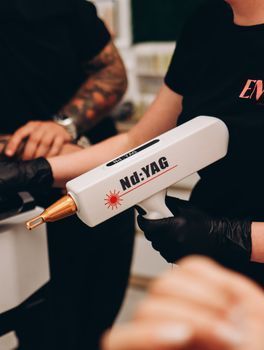
How does Genesis laser work?
Genesis uses rapid, low-energy pulses from a 1064 nm Nd:YAG laser, with the handpiece held slightly above the skin and moved over the face in repeated passes. This gently heats the upper dermis without damaging the surface. The warmth is thought to calm small dilated vessels, stimulate mild collagen remodeling and refine texture.
What concerns is it commonly used for?
- Diffuse redness and mild rosacea: one of its most common uses. See Genesis laser for redness and rosacea.
- Dull, tired-looking skin: many people notice a brighter, more even look after a few sessions.
- Fine texture and enlarged pores: gentle collagen stimulation may refine the surface.
- Post-acne redness: pink marks left after breakouts.
- Maintenance: as part of a regular skin-quality routine.
What is it less suited to?
Genesis is a gentle treatment, so it is not the main tool for deep wrinkles, sagging, deep acne scars or stubborn pigmentation such as dense sun spots. For pigment, options such as pico toning or laser toning are often considered, sometimes combined with Genesis on the same visit.
How many sessions are typical?
Most plans involve three to six sessions spaced two to four weeks apart. Many people notice redness softening and a brighter tone after two or three visits, with more stable results by the end of the course. Because Genesis is gentle, some patients continue with occasional maintenance sessions every one to three months. It is often paired on the same visit with LDM for soothing or with toning for pigment.
Who should wait before Genesis?
The doctor may postpone treatment if you have a recent sunburn or tan, an active skin infection or cold sore, an inflamed rosacea flare, or if you take medication that increases light sensitivity. Pregnancy is also a reason to discuss timing.
What is the experience like?
Most people describe a warm, slightly prickly sensation. Numbing is usually unnecessary, and the treatment itself takes about 15–30 minutes. Afterward, the skin may look slightly pink or feel warm for a few hours. Makeup can typically be applied later the same day or the next morning, and daily sunscreen is important. Results vary by individual.
Learn more on our Genesis laser page.
At a glance
- Laser type: 1064 nm Nd:YAG, non-ablative
- Common uses: Redness, dull tone, texture, pores
- Treatment time: About 15–30 minutes
- Downtime: Usually none; mild warmth for a few hours
- Sessions: Typically 3–6, 2–4 weeks apart
Related questions
Is Genesis laser good for acne?
Genesis may help with redness left after breakouts and is sometimes used as a supportive step for mild inflammatory acne, because gentle heating may calm the skin. It is not usually a standalone acne treatment. The doctor may combine it with medical skincare, HydraFacial or other approaches depending on your acne type.
Can Genesis laser be done before an event?
Because downtime is usually minimal, many people book Genesis a few days before an event for a fresher look. However, the most noticeable changes build over several sessions. If it is your first time, schedule it at least two to three days ahead in case of mild redness or sensitivity.
Is Genesis laser safe for darker skin tones?
The 1064 nm wavelength used in Genesis is generally considered suitable for many skin tones because it is less absorbed by surface pigment. Settings still need to be adjusted individually, and the doctor will review your history of pigmentation. Avoid tanning before and after treatment to reduce risk.
Keep reading
Before you book
This page is general information, not a diagnosis. Suitability, dose, number of sessions and expected results are decided by a doctor at consultation, and results vary by individual. Possible side effects include redness, swelling and bruising. Pricing is confirmed in writing before any treatment. See our medical disclaimer.
Still have a question?
A doctor at Re:berry Clinic Hongdae can answer it for your skin specifically. Multilingual consultation support is available.