
Ultherapy Prime and Sofwave are both FDA-cleared ultrasound devices, but they work at different depths. Ultherapy Prime focuses energy down to the SMAS layer for structural lift of jowls and jawline, while Sofwave targets the mid-dermis at about 1.5 mm for skin tightening and fine lines. At Re:berry Hongdae the doctor chooses, or combines, after diagnosis.
Re:berry Clinic Hongdae · Information reviewed for accuracy · Results vary by individual.
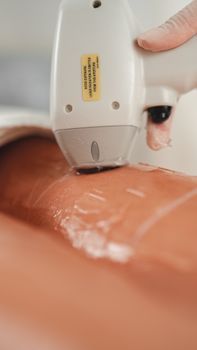
What is the main difference between Ultherapy Prime and Sofwave?
The key difference is depth and pattern of energy. Ultherapy Prime uses micro-focused ultrasound with visualization (MFU-V) to create tiny heat points at chosen depths, including 4.5 mm, where the SMAS sits. This is the layer that supports the lower face, so Ultherapy Prime is often chosen when the goal is lift.
Sofwave uses what the manufacturer calls SUPERB technology: synchronous parallel ultrasound beams that create a band of heated tissue at about 1.5 mm in the mid-dermis. An integrated cooling system protects the skin surface. Its main effect is on the collagen of the dermis itself, which supports tightening, smoother texture and softer fine lines.
How do they compare side by side?
Target layer
- Ultherapy Prime: skin, deep dermis and SMAS, using several transducers
- Sofwave: mid-dermis at a single depth
Imaging
- Ultherapy Prime: real-time ultrasound imaging lets the practitioner see layers while treating
- Sofwave: no imaging needed because it works at one fixed depth
Comfort
- Ultherapy Prime: many people feel deep heat and prickling, strongest over the jawline and temples; numbing cream is commonly used
- Sofwave: built-in cooling reduces surface discomfort, though warmth and brief sharp sensations are still common
Session length
- Ultherapy Prime: typically 60–90 minutes for the full face and neck
- Sofwave: often 30–60 minutes depending on area
Downtime
- Both usually involve only mild redness, swelling or tenderness for hours to a few days
- Ultherapy Prime may cause more lingering tenderness along the jaw for some people
FDA clearances
Ultherapy is FDA-cleared for non-invasive lifting of the brow, under the chin and neck, and for improving lines on the décolletage. Sofwave is FDA-cleared for reducing facial lines and wrinkles and for lifting of the brow, under the chin and neck. Clearance describes approved uses; it does not guarantee a specific result.
Who is better suited to Ultherapy Prime?
- People with early to moderate jowls or a softening jawline
- Those with heavier tissue where deeper support is the main issue
- Patients prioritizing lift over surface texture
- People who are comfortable with a longer, more intense session
See how it is used for one specific concern in Ultherapy Prime for sagging skin and jowls.
Who is better suited to Sofwave?
- People whose main concern is crepey skin, fine lines or mild laxity
- Thinner or slimmer faces, where deep heating needs extra caution
- Patients wanting a shorter session and built-in cooling
- Those focused on texture and enlarged pores linked to loss of firmness
The pore application is covered in Sofwave for enlarged pores.
How do I decide between them? A quick checklist
- Look in a mirror and lift your cheeks gently upward. If the jawline sharpens noticeably, deeper support may be the issue, pointing toward Ultherapy Prime.
- Pinch the skin on your cheek. If it looks crinkled or crepey, dermal quality may be the issue, pointing toward Sofwave.
- Consider your face shape. Very slim faces often need gentler, more superficial work.
- Consider your schedule. If time in the chair matters, Sofwave sessions are usually shorter.
These are only clues. A doctor's examination, ideally with imaging for Ultherapy Prime, is what confirms the right choice.
Can Ultherapy Prime and Sofwave be combined?
Yes, some plans use both: Ultherapy Prime for structural support of the lower face, and Sofwave for dermal tightening and texture. Whether they are done on the same day or weeks apart depends on skin thickness, comfort and the doctor's judgment. Re:berry's approach is to design a combination after diagnosis rather than choose a single device by default, and to prioritize stable improvement over aggressive one-off treatment.
Other common partners include Thermage FLX for surface tightening around the eyes and cheeks, and skin boosters for quality and hydration.
How long do the results last?
Both devices work by stimulating collagen remodeling, so change develops gradually over roughly 2–6 months. Many people repeat Ultherapy Prime about once a year. Sofwave is often repeated every 6–12 months depending on age and goals. Results vary by individual, and factors such as sun exposure, weight change and smoking affect how long improvements are noticeable.
What side effects should I know about?
- Temporary redness and swelling with either device
- Tenderness, which with Ultherapy may last days to a few weeks along the jaw
- Occasional bruising, tingling or temporary numbness
- Rarely, temporary nerve irritation, small surface marks or burns
Both are usually postponed during pregnancy, over active skin infection or open wounds, and the doctor will ask about implants, recent fillers and threads in the area.
What should I ask at consultation?
- Which layer is causing my concern: the SMAS, the dermis or both?
- How many lines or shots are planned, and for which areas?
- How will you protect volume in a slim face?
- What is the timing if I want to combine devices or boosters?
- How does the plan fit my travel dates?
Planning either treatment in Hongdae
Because downtime is minimal, both treatments can usually be fitted into a short Seoul trip, ideally a few days before flying. Pricing depends on the area, shot count and plan, and is confirmed in writing at consultation. See Location & Hours for the branch address and use our Booking page to request a consultation.
Key facts
- Ultherapy Prime depth: Typically 1.5, 3.0 and 4.5 mm, reaching the SMAS
- Sofwave depth: About 1.5 mm, mid-dermis
- Session time: Ultherapy Prime about 60–90 min; Sofwave often 30–60 min
- Comfort: Sofwave has built-in cooling; Ultherapy can feel more intense near bone
- Downtime: Minimal for both
- Results seen: Gradually over about 2–6 months for both
Frequently asked questions
Which hurts more, Ultherapy Prime or Sofwave?
Many patients find Ultherapy Prime more intense, especially over bony areas, because energy reaches deeper layers. Sofwave includes integrated cooling, which many people find helps, though it still produces heat and brief sharp sensations. Comfort varies a lot between individuals, and numbing options are discussed beforehand.
Is Sofwave better for Asian skin?
Both devices are used widely on Asian skin types. Sofwave's single mid-dermal depth and cooling may suit slimmer faces or people concerned about volume loss, while Ultherapy Prime may suit those needing deeper lift. The doctor considers skin thickness, fat volume and goals rather than ethnicity alone.
Which one is better for a double chin?
Neither is primarily a fat-reduction treatment. Both may tighten loose skin under the chin, and Ultherapy Prime can reach deeper support layers there. If fat is the main issue, a contouring option such as ONDA or a contour injection may be discussed instead or in addition.
Can I do Sofwave first and Ultherapy Prime later?
Yes, some patients start with Sofwave for texture and skin tightening and add Ultherapy Prime later if lower-face sagging becomes the priority. The doctor will advise appropriate spacing between sessions so tissue has time to respond and the plan remains safe.
Keep reading
Before you book
This page is general information, not a diagnosis. Suitability, dose, number of sessions and expected results are decided by a doctor at consultation, and results vary by individual. Possible side effects include redness, swelling and bruising. Pricing is confirmed in writing before any treatment. See our medical disclaimer.
Start with a diagnosis, not a package
Re:berry Clinic Hongdae designs your plan after a one-to-one skin assessment. Multilingual consultation support is available.