
ONDA lifting is a non-invasive treatment that uses Coolwaves, a 2.45 GHz microwave energy developed by DEKA, to heat fat and the deeper skin layers while the surface is cooled. It is used to reduce stubborn fat and tighten skin on the lower face, jawline and body. At Re:berry Hongdae it is planned after a doctor's assessment, with little downtime.
Re:berry Clinic Hongdae · Information reviewed for accuracy · Results vary by individual.
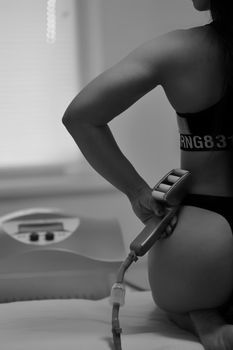
How does ONDA work?
ONDA uses microwaves at a frequency of 2.45 GHz, which the manufacturer DEKA calls Coolwaves. Microwaves are absorbed well by fat tissue, so energy can be focused in the fat layer while a cooling system protects the skin surface. The heat may cause fat cells to break down gradually, while also stimulating collagen in the surrounding tissue. The result is intended to be a slimmer, firmer contour over several weeks.
Different handpieces treat different depths, which lets the doctor target deeper fat on the body or finer layers on the face.
What is ONDA used for?
- Face: Heaviness along the jawline, double chin and soft lower-face contour. See ONDA face lifting.
- Body: Stubborn fat and loose skin on the abdomen, flanks, thighs and arms. See ONDA Body.
- Cellulite: Some handpieces are used to improve the appearance of cellulite.
At Re:berry, ONDA is sometimes paired with the Berry Slim contour injection for areas where fat reduction is the main goal.
How is ONDA different from Ulthera?
Ulthera uses micro-focused ultrasound to target the SMAS, the deep supportive layer, mainly for lifting. ONDA uses microwave energy that is absorbed mostly by fat, so it is chosen when heaviness or excess fat contributes to the problem. Some people benefit from both. Our comparison ONDA vs Ulthera for face explains the criteria.
What to expect
Treatment typically feels like warmth and occasional heat spikes. Afterward, mild redness, swelling or tenderness is common and usually settles within days. ONDA is generally avoided during pregnancy, over metal implants or pacemakers, and on very lean faces where fat loss could cause hollowing. Results develop gradually over about four to twelve weeks and vary by individual.
Before treatment, the doctor checks how much of your contour concern is fat, how much is laxity and how much is muscle or bone structure. ONDA mainly addresses the first two, so a square jaw caused by a large masseter muscle, for example, may respond better to jaw Botox instead.
At a glance
- Technology: Coolwaves microwave energy (2.45 GHz) by DEKA
- Targets: Subcutaneous fat and deep dermis
- Areas: Lower face, jawline, double chin, abdomen, thighs, arms
- Downtime: Usually minimal; mild redness or tenderness
- Sessions: Often 1 to 3 for face; body may need more
Related questions
Does ONDA reduce face fat?
ONDA is designed to target fat, so it may reduce localized fat along the jawline and under the chin. The amount varies by person and is gradual rather than dramatic. On faces with little fat, a doctor may suggest a different approach to avoid a hollow look. Assessment comes first.
Is ONDA painful?
Most people describe a warm, sometimes intense heating sensation, with cooling helping comfort. The face can be more sensitive over bony areas. Energy settings and pacing can be adjusted. Tell the care team if the heat feels too strong during treatment.
How many ONDA sessions do I need?
For the face, many plans involve one to three sessions spaced several weeks apart. Body areas often need more sessions depending on the amount of fat and skin laxity. The doctor will recommend a number after examining you, and results vary by individual.
Keep reading
Before you book
This page is general information, not a diagnosis. Suitability, dose, number of sessions and expected results are decided by a doctor at consultation, and results vary by individual. Possible side effects include redness, swelling and bruising. Pricing is confirmed in writing before any treatment. See our medical disclaimer.
Still have a question?
A doctor at Re:berry Clinic Hongdae can answer it for your skin specifically. Multilingual consultation support is available.