
HydraFacial can help oily, congested and mildly acne-prone skin by deep-cleansing pores, gently exfoliating and removing debris without harsh manual squeezing. At Re:berry Hongdae it is typically used as a supporting treatment for blackheads, whiteheads and mild breakouts, often every two to four weeks, alongside medical acne care for more active or inflamed acne.
Re:berry Clinic Hongdae · Information reviewed for accuracy · Results vary by individual.
Can HydraFacial help acne?
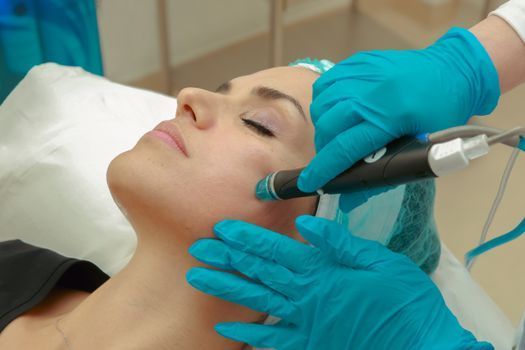
HydraFacial is a multi-step facial that uses a vortex suction tip to cleanse, exfoliate, extract and infuse serums. For acne-prone skin, its main value is clearing the oil and dead skin that block pores, which is one of the early steps in how breakouts form.
It is not a cure for acne. Acne also involves hormones, bacteria and inflammation, which HydraFacial does not fully address. Think of it as a way to keep pores clear and skin calmer while other treatments tackle the root causes.
Who does HydraFacial suit?
HydraFacial for acne tends to work best for:
- Oily or combination skin with visible blackheads on the nose and chin
- Mild breakouts made up mostly of small whiteheads and bumps
- Skin that looks dull and congested between breakouts
- People who want to avoid painful manual extraction
- Students and office workers in Hongdae wanting regular maintenance with no downtime
When to choose something else first
If you have deep, painful nodules or cysts, widespread inflamed pustules, or acne that leaves scars, see a doctor for medical acne treatment first. Suction and exfoliation over very inflamed skin can be uncomfortable and may irritate it further. The doctor may recommend medication or other procedures before adding HydraFacial.
What happens during a session?
- Skin check: The doctor or therapist assesses active spots and decides which areas to treat or avoid.
- Cleanse and peel: A gentle exfoliating solution loosens dead skin and surface oil.
- Extraction: Gentle suction draws debris from pores. Many people are surprised by what is collected in the canister.
- Infusion: Hydrating and soothing serums are applied to support the skin barrier.
- Finish: Optional LED light or a calming mask, then sunscreen.
The process usually takes 30 to 60 minutes, and you can return to classes or work immediately afterward.
How many sessions are needed?
For acne-prone skin, many patients start with three to six sessions spaced two to four weeks apart, then continue monthly for maintenance if it helps. Pores refill over time, so a single session tends to give a short-lived result. Results vary by individual.
How is HydraFacial different from a regular facial?
A traditional facial often relies on steam and manual squeezing to clear pores, which can leave red marks and sometimes push debris deeper or spread inflammation. HydraFacial uses closed-loop suction instead, so extraction is more controlled and usually more comfortable. The serums applied at the end are chosen for the skin type, and for acne-prone skin these typically focus on calming and lightweight hydration rather than rich oils.
It is also performed in a medical clinic setting at Re:berry Hongdae, which means a doctor can look at your skin first and spot problems a facial alone cannot fix, such as hormonal acne patterns, fungal acne or early scarring.
What results can I realistically expect?
Right after a session, most people notice cleaner-looking pores, less shine and a fresher surface. Over a course of treatments, blackheads may build up more slowly and small breakouts may become less frequent for some patients. HydraFacial does not usually change deep, hormonal or cystic acne by itself, which is why the doctor may combine it with other care. Results vary by individual.
Useful combinations for acne
- Oil control: Skin Botox may reduce sebum production, while HydraFacial keeps pores clear. See skin Botox for acne.
- Medical skincare: Prescription topicals or oral medication prescribed after consultation tackle bacteria and inflammation.
- Post-acne marks: Once breakouts settle, toning lasers may help fade red or brown marks.
- Scars: Regenerative boosters or lasers can be considered later for textured scars.
Possible side effects
HydraFacial is gentle, but some people notice temporary pinkness, mild tingling or a small flare of breakouts in the days after as congestion is brought to the surface. Tell the team if you use isotretinoin, strong retinoids or have recently had a peel, as the treatment may need to be postponed or adjusted.
Aftercare tips
- Skip heavy makeup for the rest of the day if you can
- Avoid scrubs, strong acids and saunas for 24–48 hours
- Use non-comedogenic moisturizer and sunscreen
- Change pillowcases regularly and avoid touching your face
Alternatives to HydraFacial for acne
Other options include chemical peels, prescription medication and laser treatments. Your doctor will recommend the mix that fits your acne type. Learn more on our acne concern page.
Pricing and booking
Pricing depends on the type of facial, add-ons and number of sessions, and is confirmed in writing at consultation. Book through our Booking page.
Key facts
- Best for: Blackheads, clogged pores, mild breakouts, oily skin
- Not ideal for: Severe, cystic or very inflamed acne on its own
- Treatment time: About 30–60 minutes
- Downtime: Usually none; brief pinkness
- Sessions: Often every 2–4 weeks for a short course
- Pairs with: Skin Botox, medical skincare, scar treatments later
Frequently asked questions
Will HydraFacial make my acne worse?
For most people with mild, congested acne, HydraFacial helps rather than worsens skin. Some notice a short purge of small spots for a few days as clogged pores clear. Very inflamed or cystic acne may be irritated by suction, so the practitioner may avoid those areas or recommend medical treatment first.
Can I get HydraFacial while using acne medication?
It depends on the medication. Topical treatments may only need to be paused for a few days. If you take isotretinoin, many clinicians avoid exfoliating treatments until some time after finishing the course. Bring a list of your medications to consultation so the doctor can advise safely.
Does HydraFacial remove acne scars?
HydraFacial can make skin look smoother and more even, but it does not remodel the deeper tissue that forms textured scars. Indented acne scars usually need treatments such as regenerative boosters or lasers. HydraFacial may be used alongside them to keep skin clear and hydrated.
Keep reading
Before you book
This page is general information, not a diagnosis. Suitability, dose, number of sessions and expected results are decided by a doctor at consultation, and results vary by individual. Possible side effects include redness, swelling and bruising. Pricing is confirmed in writing before any treatment. See our medical disclaimer.
Start with a diagnosis, not a package
Re:berry Clinic Hongdae designs your plan after a one-to-one skin assessment. Multilingual consultation support is available.